The Week the Industry Quietly Changed Direction
This week, something rather telling happened.
Data reported by The Guardian showed that breast reductions have now overtaken enlargements in the UK for the first time. At the same time, coverage from The Sun pointed to a growing appetite for subtle facial tweaks and soft rejuvenation, even among younger patients.
On the surface, these look like separate stories.
They are not.
Together, they point to a wider shift.
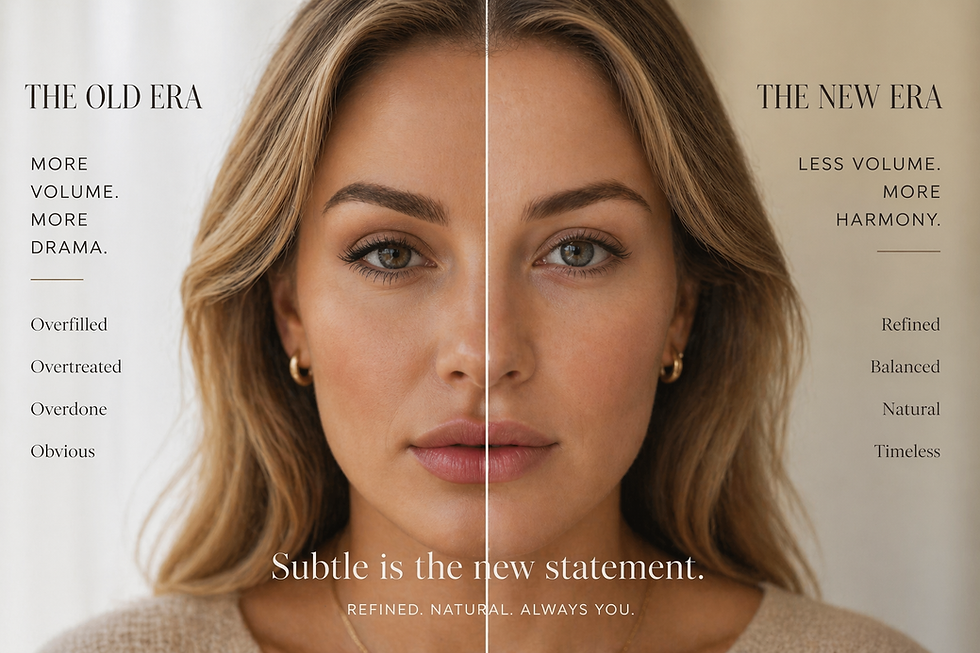
Aesthetic medicine is moving from:
“Make it obvious”
to:
“Make it better, but keep it believable.”
From “more” to “enough”: the new aesthetic mindset
For years, the industry leaned heavily into volume.
More lips.
More cheeks.
More definition.
Now the conversation sounds very different.
Patients are saying:
• “I just want to look less tired”
• “I don’t want anyone to notice, just improve things”
Think of it like seasoning food.
A pinch of salt elevates the dish.
Half the shaker ruins it.
Modern aesthetics is about knowing when to stop at the pinch.
Why this shift is happening (and why it matters)
1. Function is finally beating fashion
The rise in breast reductions is not a rejection of aesthetics.
It is a return to comfort, function, and proportion.
• Less back pain
• Better posture
• A body that works with you, not against you
That same thinking is now shaping facial treatments.
Patients want results that:
• move naturally
• age well
• do not interfere with expression
In short, they want to still look like themselves.
2. Social media has grown up a bit
We have all seen it.
• Overfilled faces
• Product migration
• Results that looked good for six weeks and not much else
The difference now is that we have seen the long-term outcomes.
The industry has, quietly, had a reality check.
What once looked aspirational can now look… overdone.
And patients have noticed.
3. The rise of “quiet luxury” aesthetics
Borrowed from fashion, this idea has landed firmly in clinic.
It means:
• toxin that softens, not freezes
• filler that supports, not inflates
• skin that looks healthy, not processed
Put simply:
If people can tell what you have had done, it is probably too much.
The uncomfortable truth: not every clinic has caught up
While the industry is shifting, not everyone has moved with it.
You still see:
• treatments driven by trends rather than anatomy
• volume used where support would be better
• short-term results prioritised over long-term tissue health
This is where problems begin.
Regulatory expectations in the UK are clear. You can read more via:
• Care Quality Commission (CQC): https://www.cqc.org.uk
• Joint Council for Cosmetic Practitioners (JCCP): https://www.jccp.org.uk
Treatments must be:
• clinically justified
• proportionate
• delivered with full patient understanding
Subtle is not just a style choice.
It is a safety standard.
What “natural” actually means
“Natural” gets used a lot. Often incorrectly.
It does not mean doing nothing.
It means:
• respecting anatomy
• working within biological limits
• planning beyond the next two weeks
In practice, that looks like:
• toxin doses that allow expression
• filler that restores structure, not exaggerates it
• a focus on skin quality rather than constant volume
It is less about adding more.
More about working smarter.
Where injectables now sit
This is where it becomes interesting.
As surgery moves towards reduction and refinement, injectables are becoming something different.
Not transformation.
Maintenance.
Patients are choosing:
• prevention over correction
• gradual change over dramatic shifts
Which aligns perfectly with:
• botulinum toxin for controlled muscle activity
• regenerative treatments for skin quality
• minimal, well-placed filler
If you want to explore how different toxin options compare, you can read our full breakdown here:
The goal is no longer to change the face.
It is to optimise it over time.
How to approach this as a patient
If you are considering treatment, the questions you ask matter.
• “What are we actually trying to achieve?”
• “How will this look in a year?”
• “What happens if we do less?”
A good clinician will answer them.
A great one will ask them before you do.
The Haus of Ästhetik approach
At Haus of Ästhetik, the approach is intentionally simple:
• conservative treatment planning
• safety and governance first
• results built gradually, not rushed
If you are considering treatment, you can book a consultation here:
Because the best outcomes are not created in one appointment.
They are built over time.
Final thought: the era of invisible work
If the last decade was about visible change, this one is about restraint.
The best work in aesthetics in 2026 will not be obvious.
It will be the kind of result where people say:
“You look well… have you done something different?”
And you cannot quite put your finger on what.
That is not accidental.
That is good medicine.
References
The Guardian – UK breast reduction trend: https://www.theguardian.com
The Sun – Facial tweak trends: https://www.thesun.co.uk
Care Quality Commission (CQC): https://www.cqc.org.uk
Joint Council for Cosmetic Practitioners (JCCP): https://www.jccp.org.uk


Comments